Everything You Need to Know
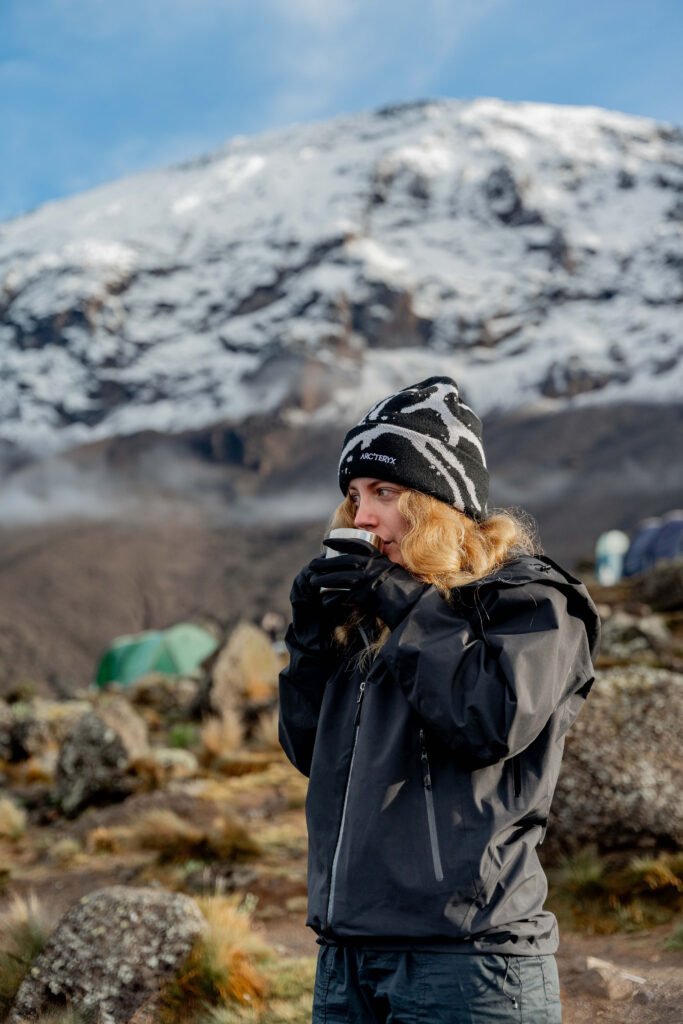
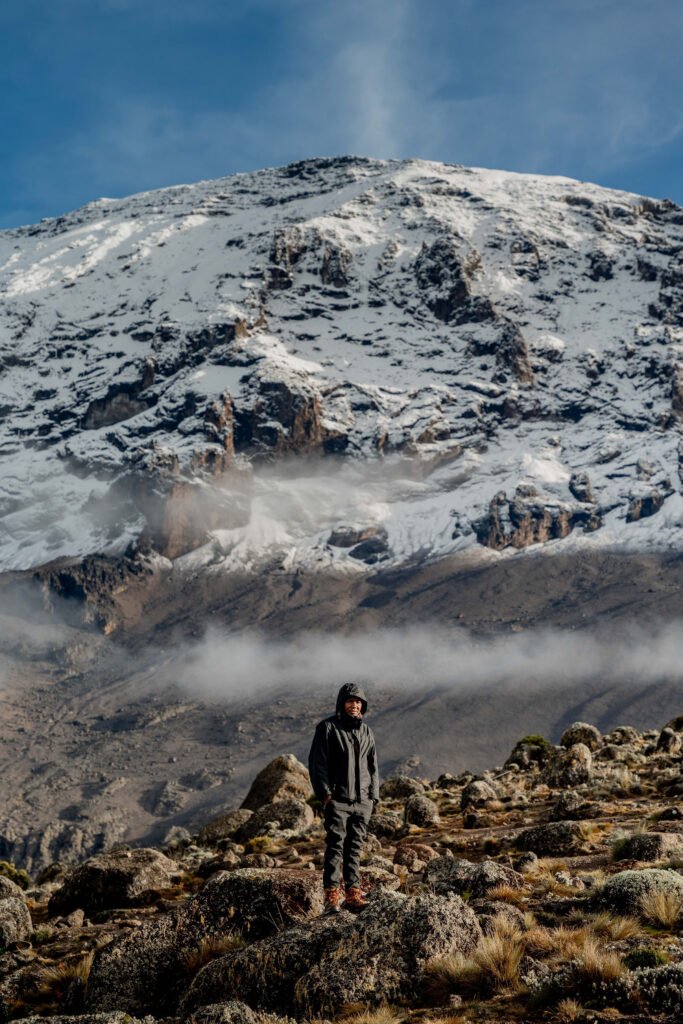
Kilimanjaro is unlike any other mountain. At 5,895 metres, it is the highest point in Africa and the tallest freestanding mountain on earth. Unlike most peaks of this height, you can reach the summit without ropes, technical training, or prior climbing experience.
The climb takes you through five ecosystems in a matter of days. Rainforest at the base gives way to heath and moorland, then alpine desert, then the ice and rock of the summit zone. The landscape changes so dramatically that most climbers say it feels like several expeditions in one.
The real challenge is altitude. Thin air affects everyone differently, and how well you acclimatize matters far more than fitness. Choosing the right route and giving your body enough time to adjust is what separates a successful Kilimanjaro climb from a difficult one.
Climb with a Tanzanian-Led Team
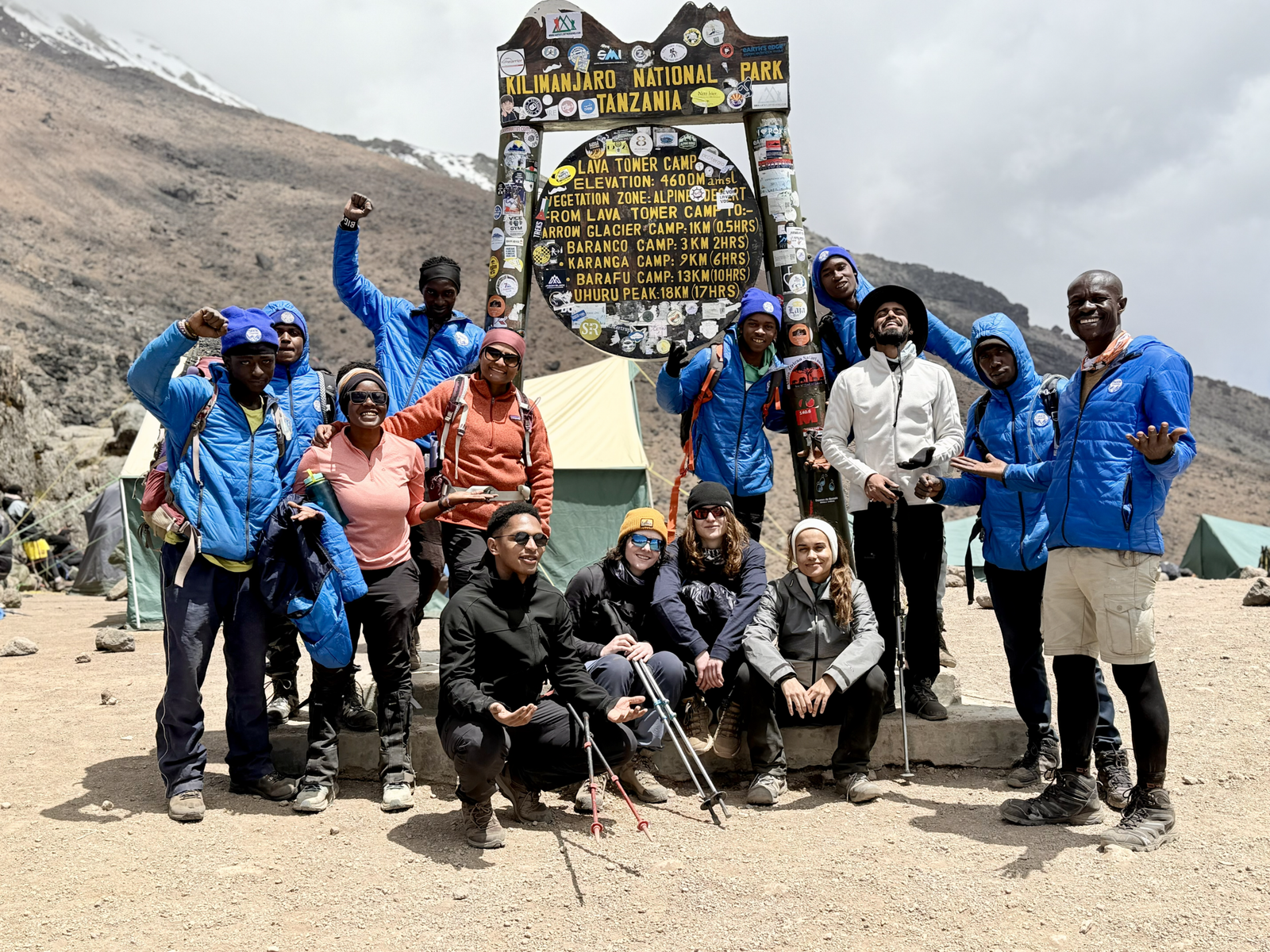
Our teams understand the mountain’s changing conditions, the rhythm required for safe acclimatization, and the small decisions that can make a significant difference during a high-altitude trek.
Climbing with a Tanzanian-led team also means supporting a structure where local guides, porters, and mountain crews play a central role in every expedition.
Our Kilimanjaro expeditions focus on:
• experienced high-altitude guiding teams
• carefully paced itineraries designed for acclimatization
• ethical porter treatment and fair working conditions
• small expedition groups for better support
• detailed pre-climb preparation for every guest
The goal is simple: a well-organized Kilimanjaro expedition where safety, preparation, and local expertise come first.
Kilimanjaro Climbing Routes
Mount Kilimanjaro can be climbed by several established routes, each offering different scenery, acclimatization profiles, and expedition lengths. Explore the routes below to find the best option for your climb.
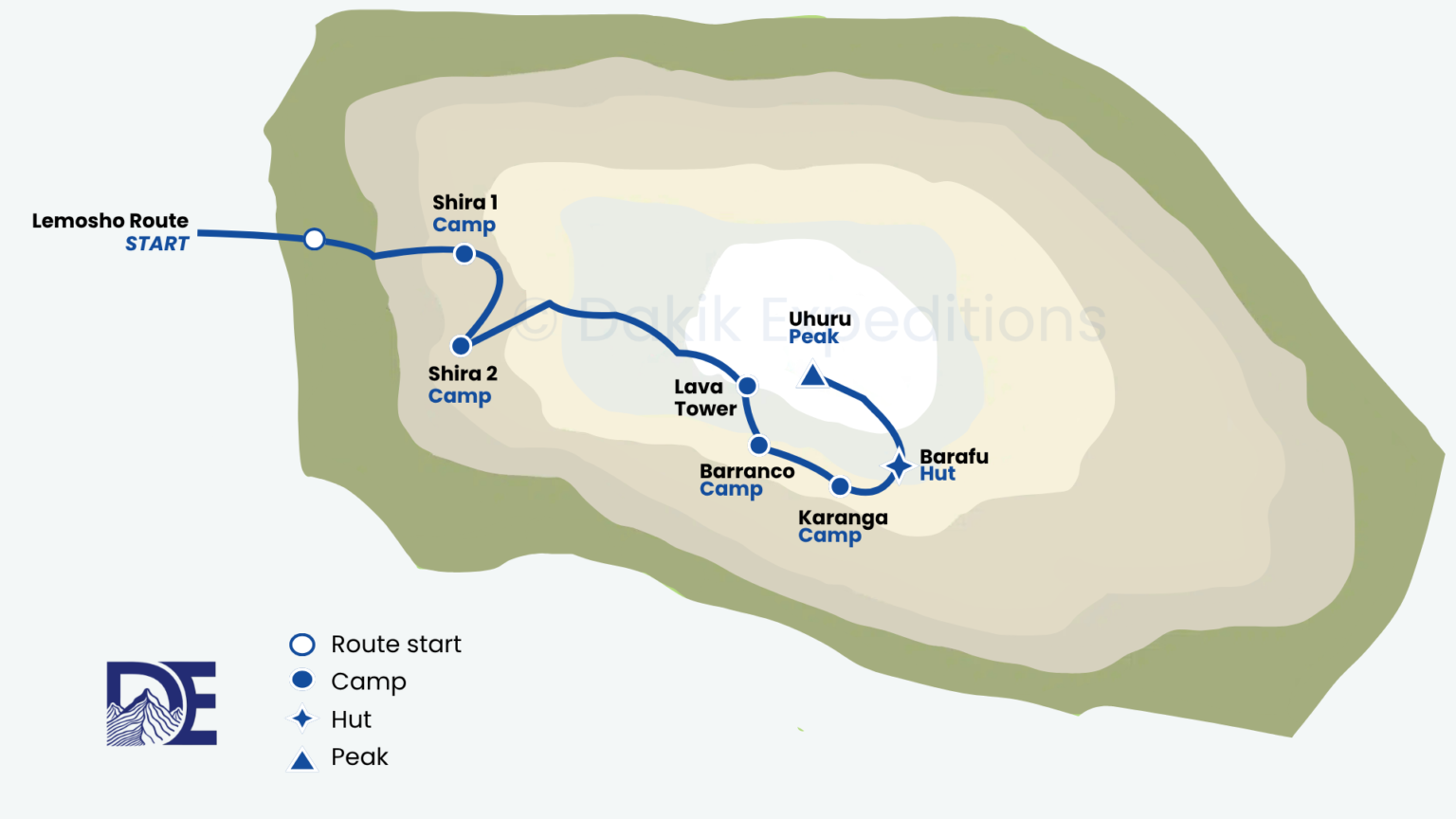
Lemosho Route
A quieter approach from the west through untouched forest, joining the southern slopes further up. The extra days make a genuine difference at altitude, so you arrive at the summit feeling your best.
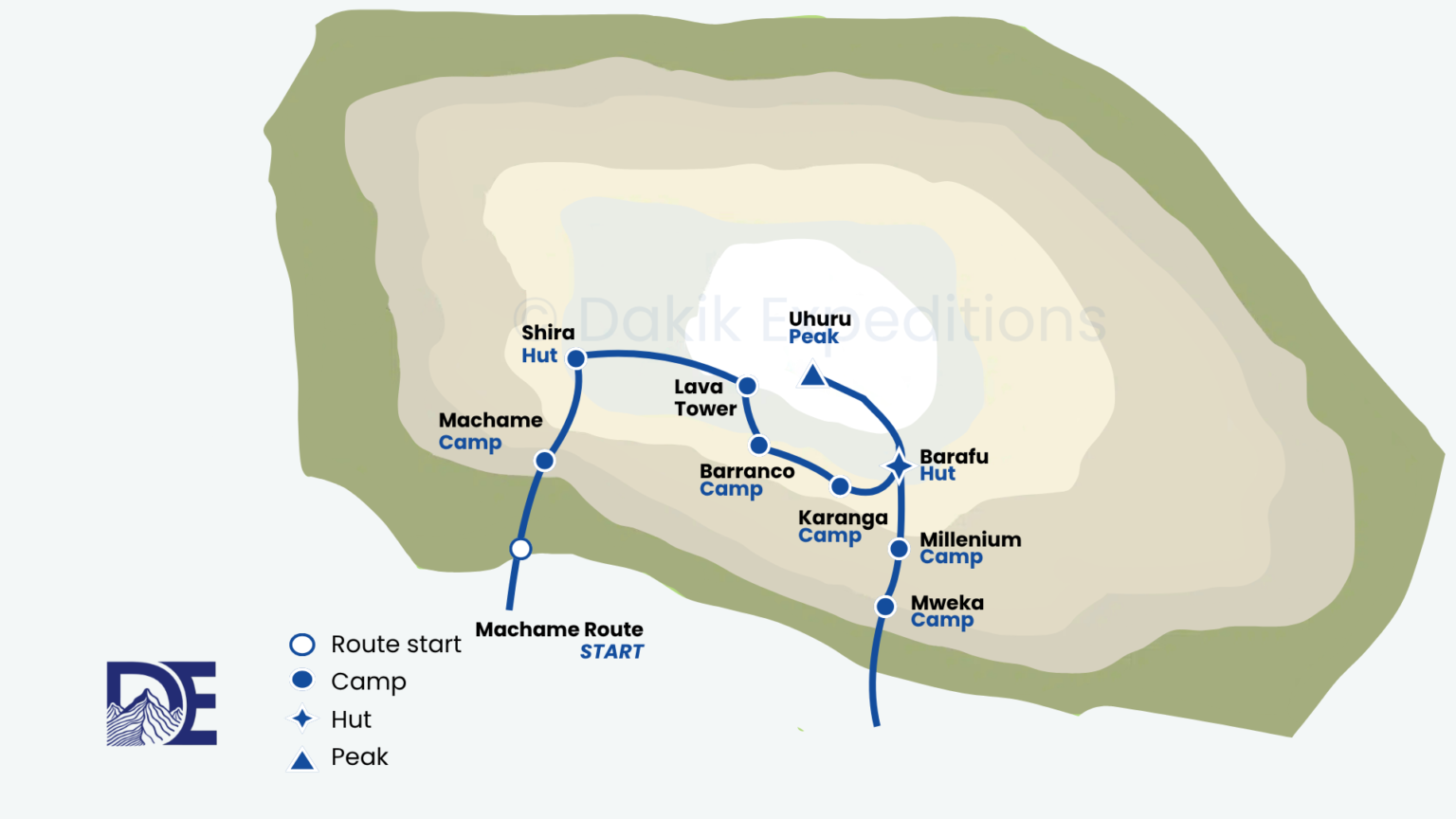
Machame Route
The route most of our climbers choose. Dramatic ridgelines, big views, and a climb profile that gives your body real time to adjust. If you are doing Kilimanjaro for the first time, this is where we would start.
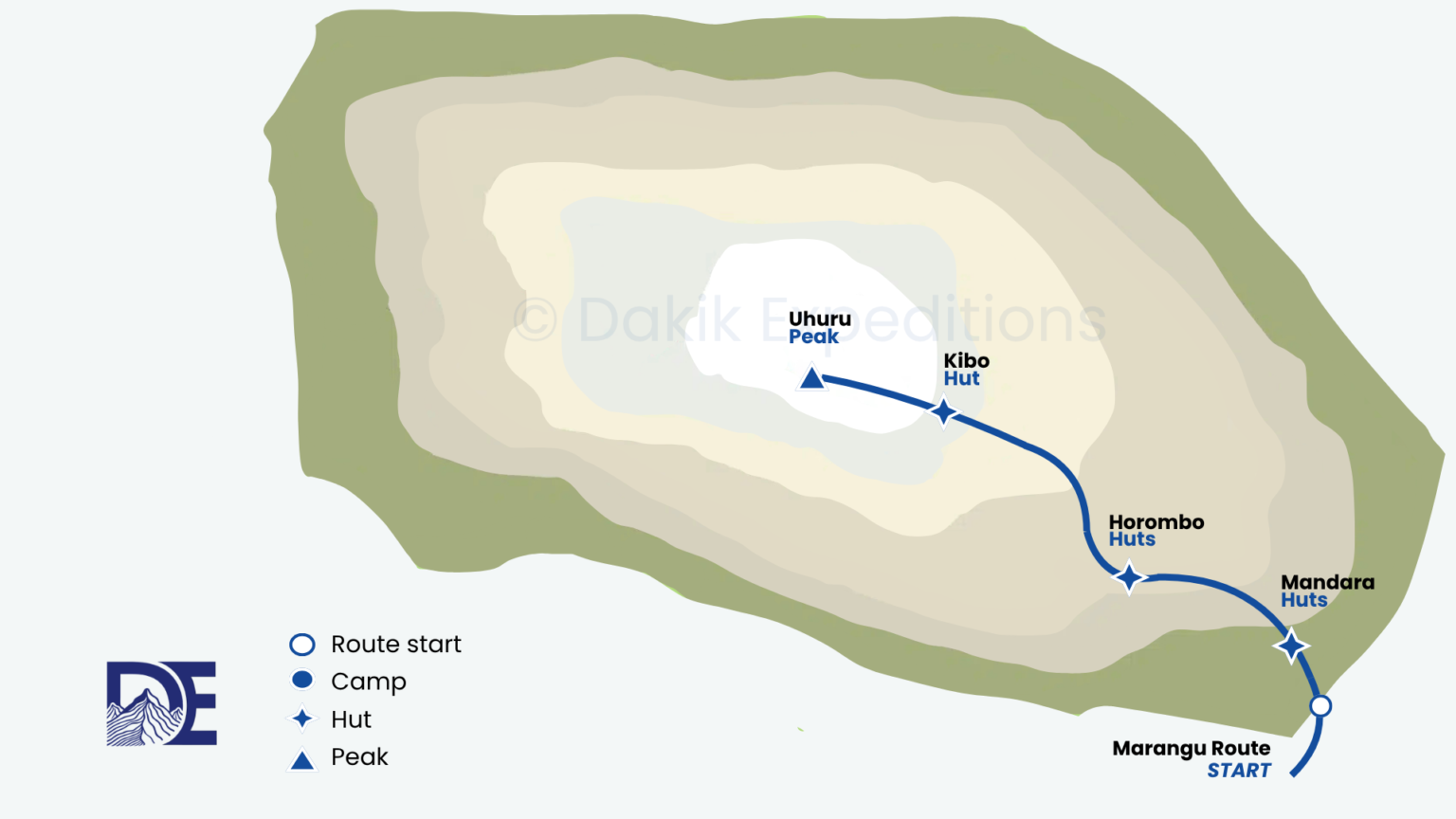
Marangu Route
The only route where you sleep in huts rather than tents. It is the shortest itinerary on the mountain, which means less time to acclimatize. Best suited to climbers with some experience at altitude.
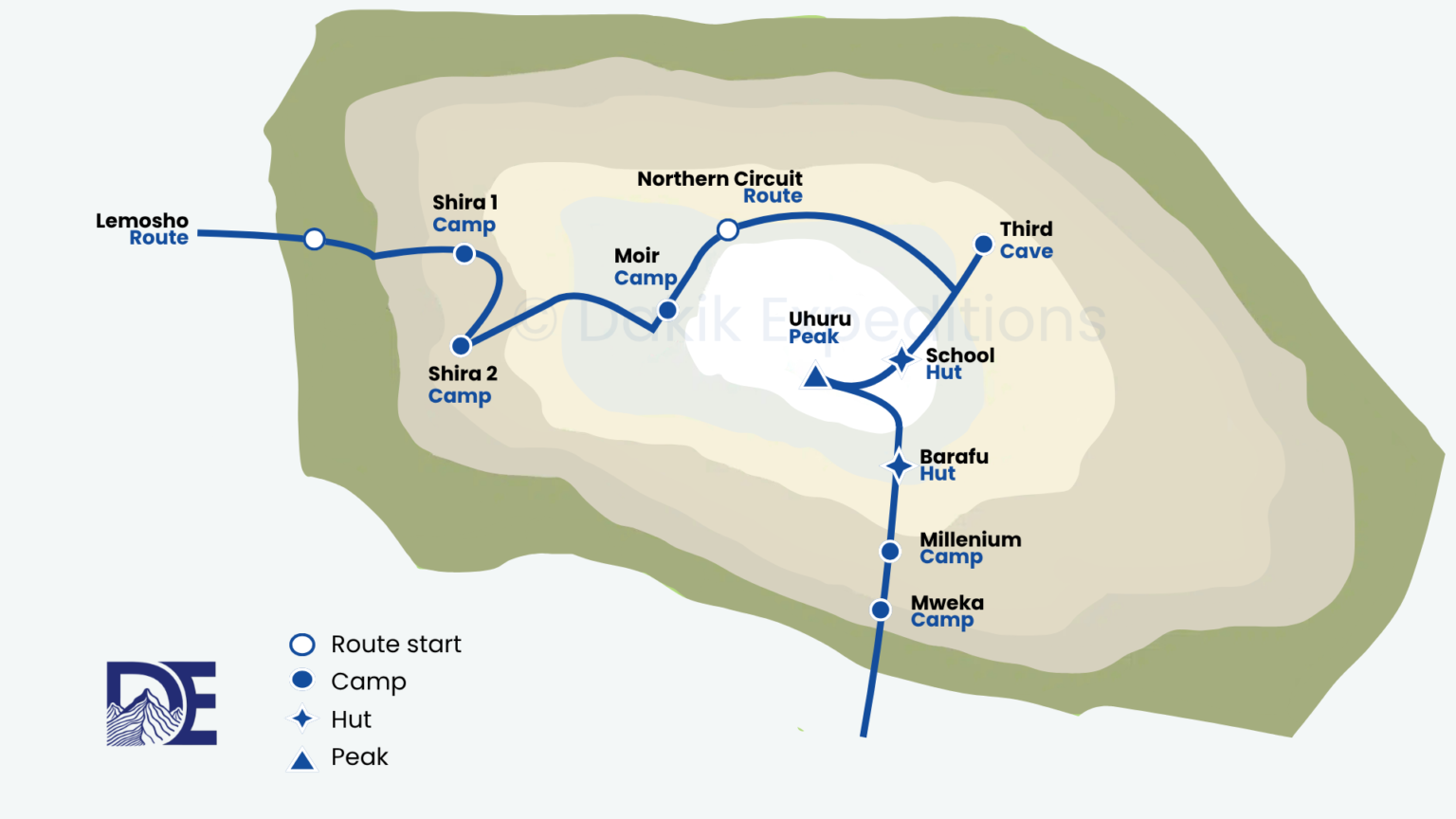
Northern Circuit Route
The long way round, and worth every day of it. Near-complete solitude, scenery most climbers never see, and the best acclimatization profile of any route we offer.
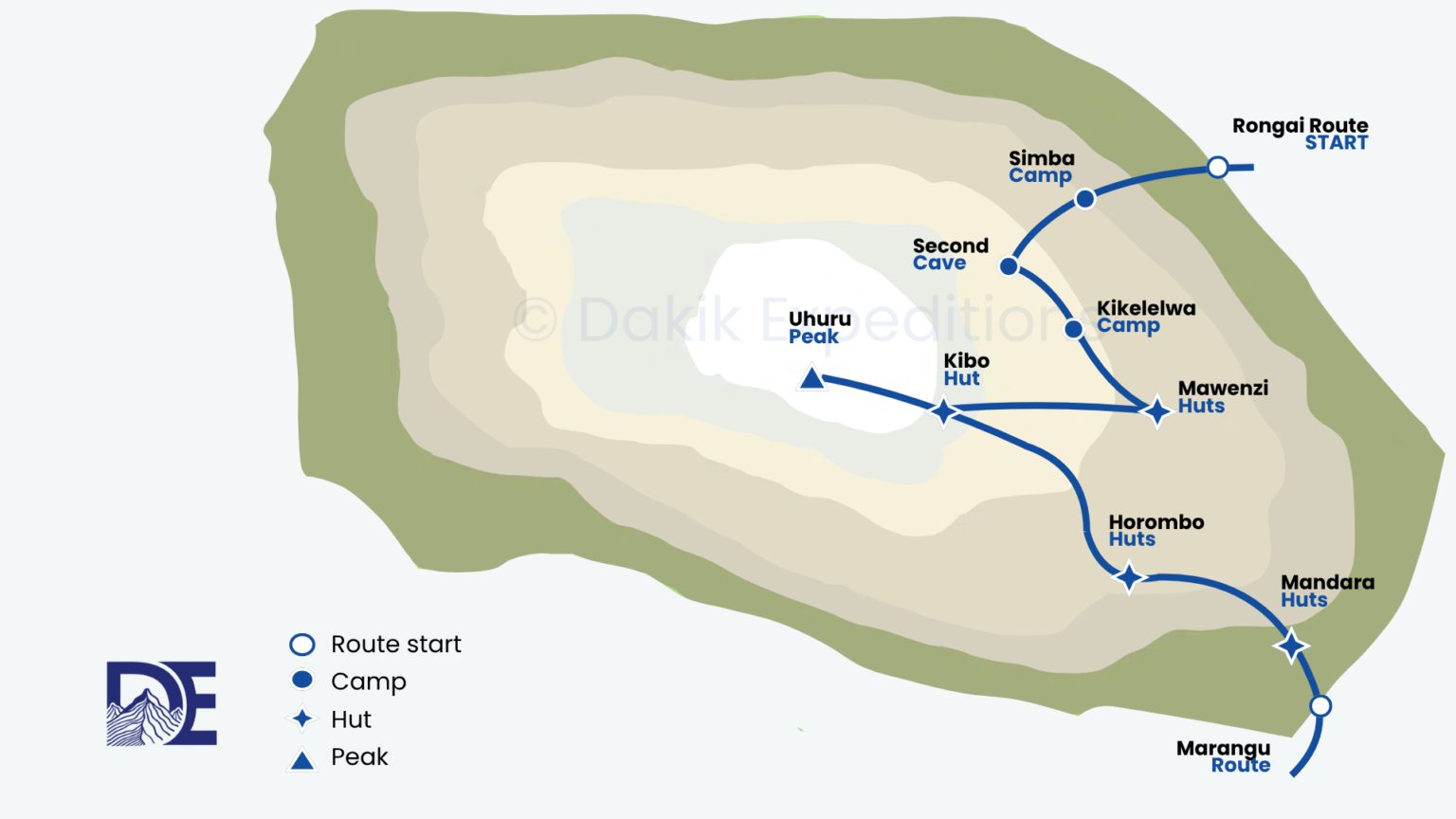
Rongai Route
Approaches from the north near the Kenyan border. Quieter than the southern routes, more open landscape, and a gradual pace. A good option if you want to avoid the busier trails.
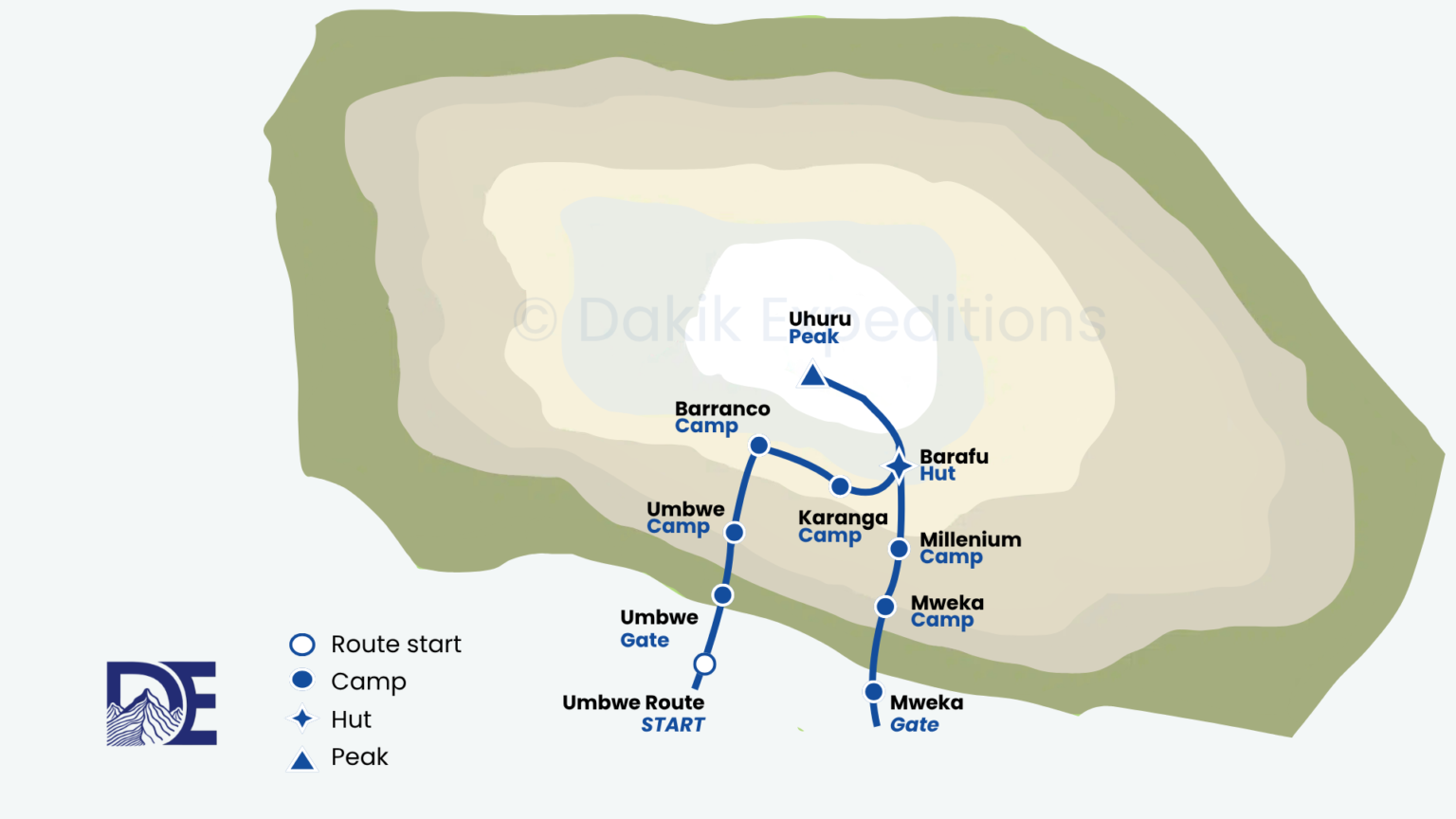
Umbwe Route
Short, steep, and unforgiving. The most direct line to the summit and the least forgiving at altitude. Not for first-time climbers, but a serious and rewarding route for experienced trekkers.
Guided by experience
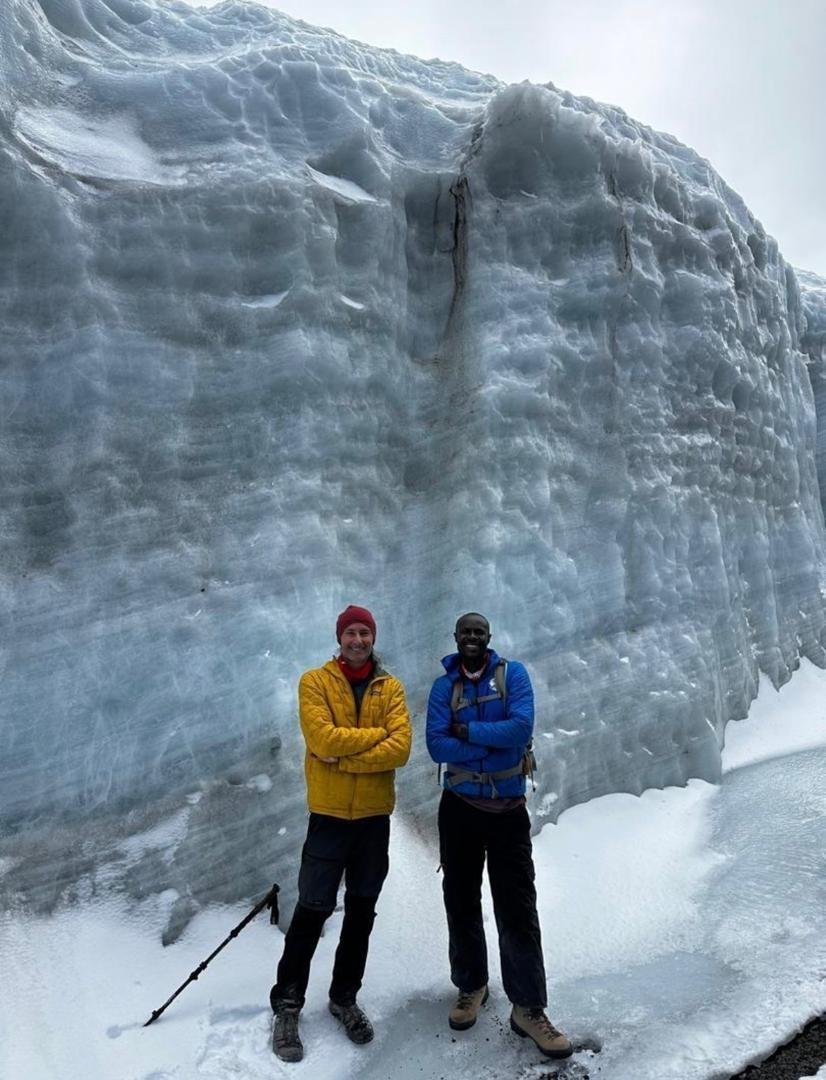
Dakik Expeditions was founded by Rawan Dakik, one of the youngest climbers to complete the Seven Summits — the highest peaks on each continent. Her experience on the world’s major mountains shapes every Kilimanjaro expedition with careful pacing, expert logistical planning, and mountain teams who thrive in high-altitude environments.
Though Kilimanjaro is not a technical climb, its challenges of altitude, weather, and endurance demand thoughtful preparation. That’s why we pair experienced Tanzanian guides with structured itineraries focused on acclimatization and safety. So you can focus entirely on the journey toward the summit of Africa.
What to Expect When Climbing Mount Kilimanjaro?
Ready to Climb Kilimanjaro?
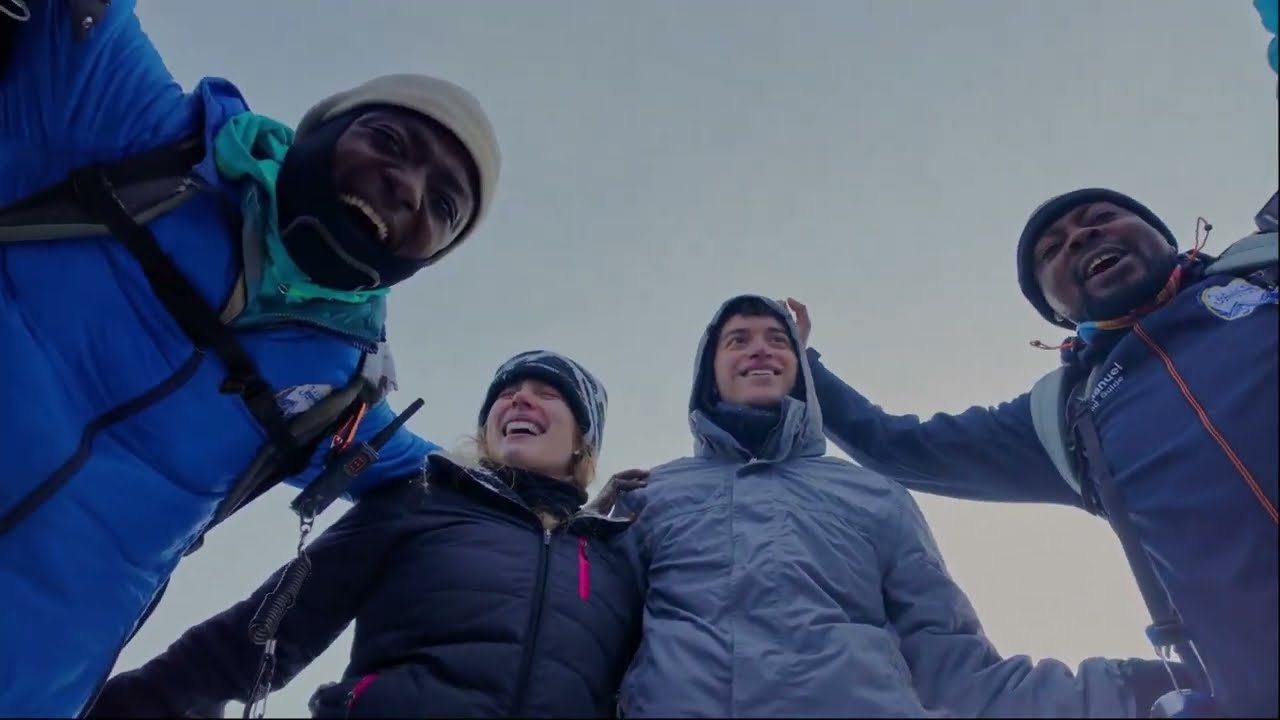
Join our expert-guided Kilimanjaro climbing adventure and experience the thrill of a lifetime!
Climbing Mount Kilimanjaro FAQs