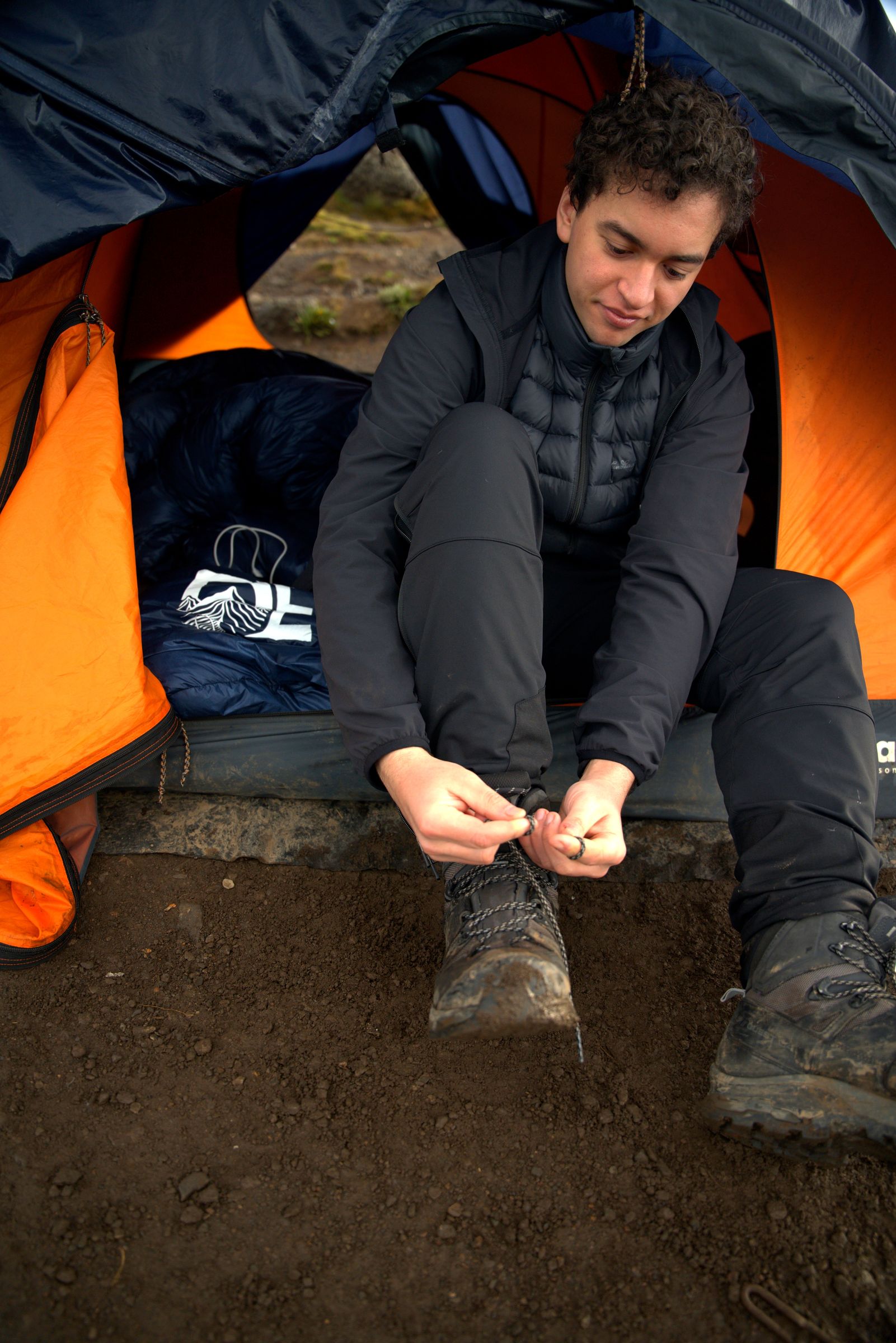
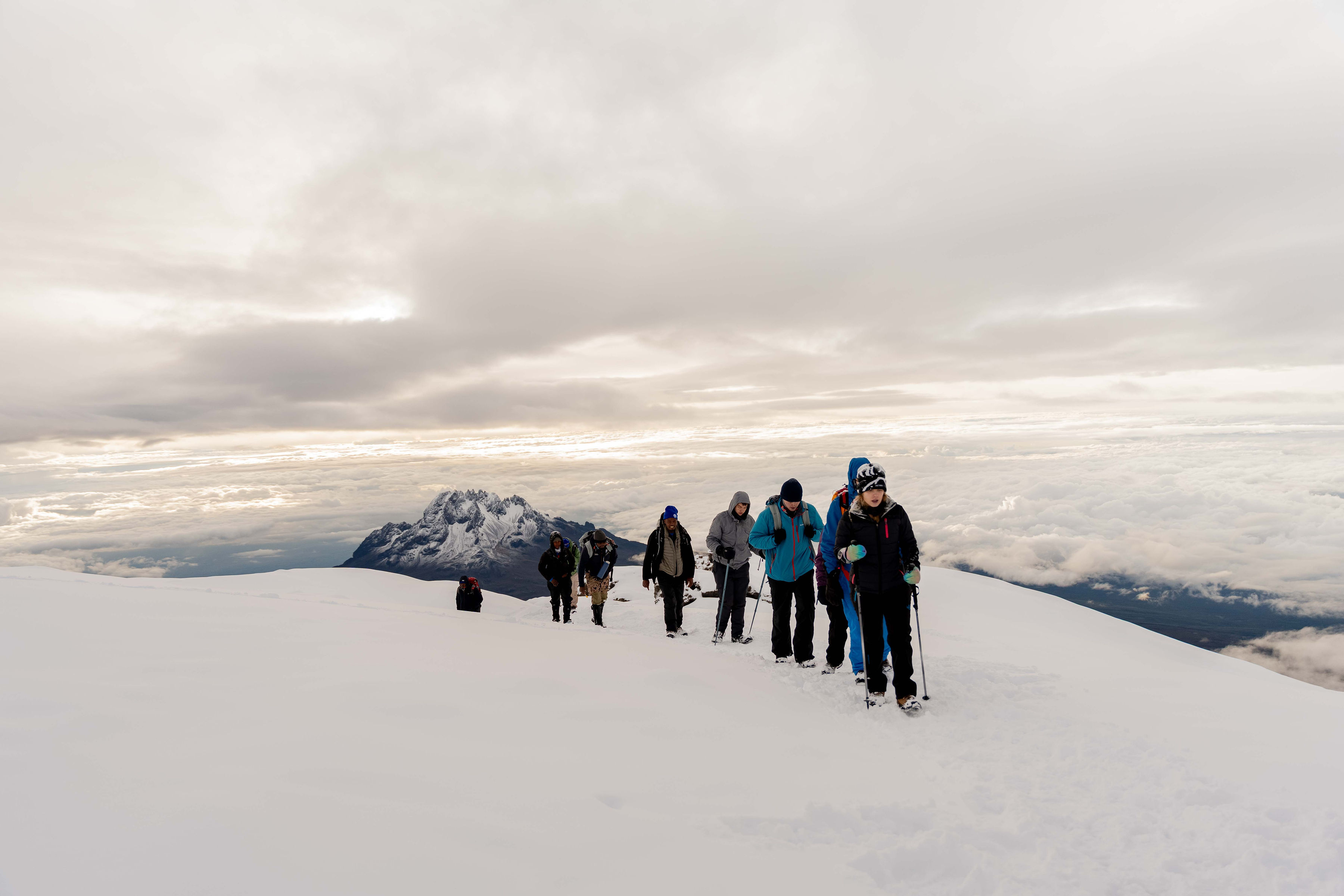
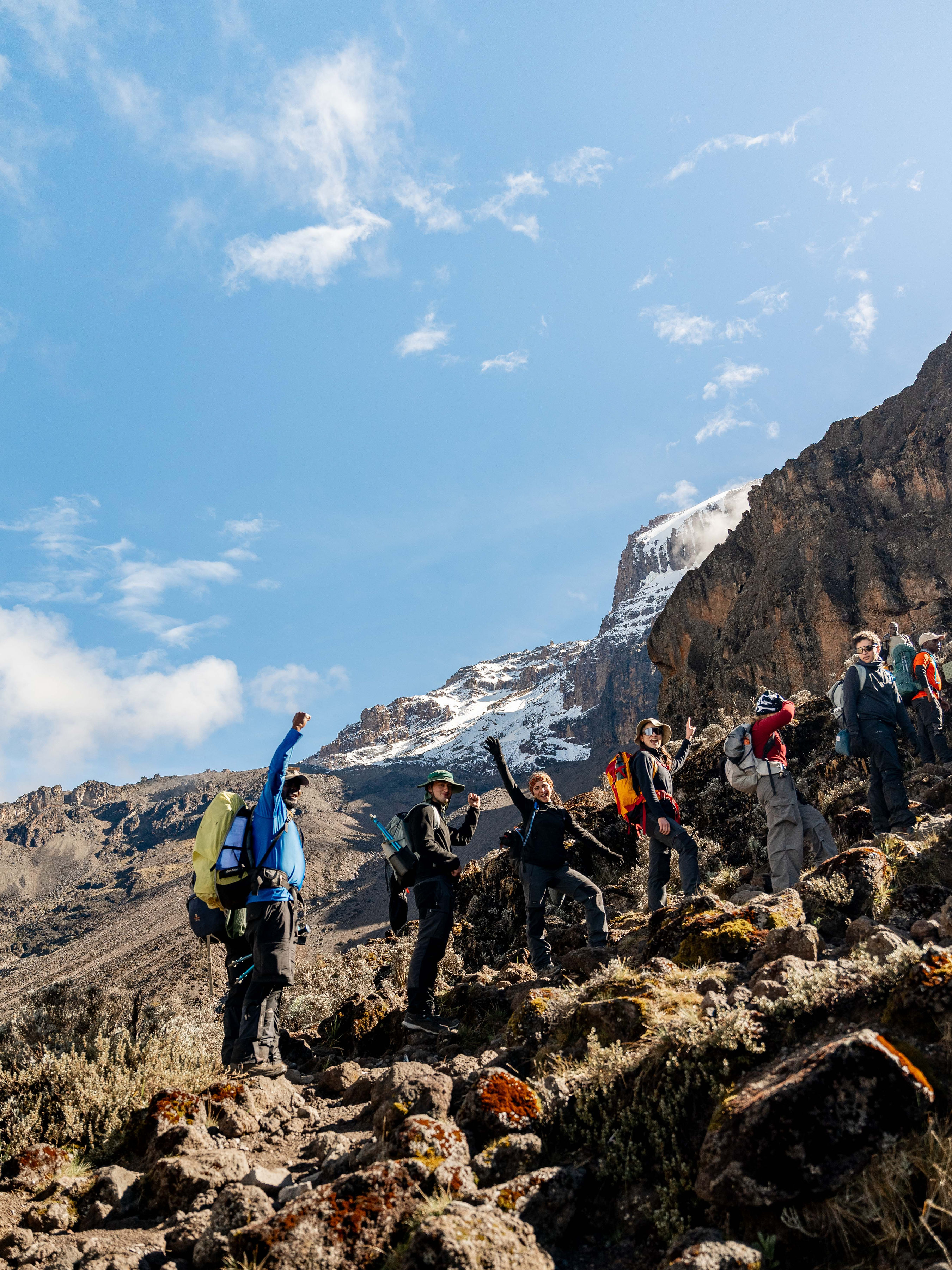
Summit night starts earlier than most people plan for. Wake-up call at Barafu Camp is usually 11pm, and the climb to Uhuru Peak takes most people six to seven hours, timed so you reach the top around sunrise.
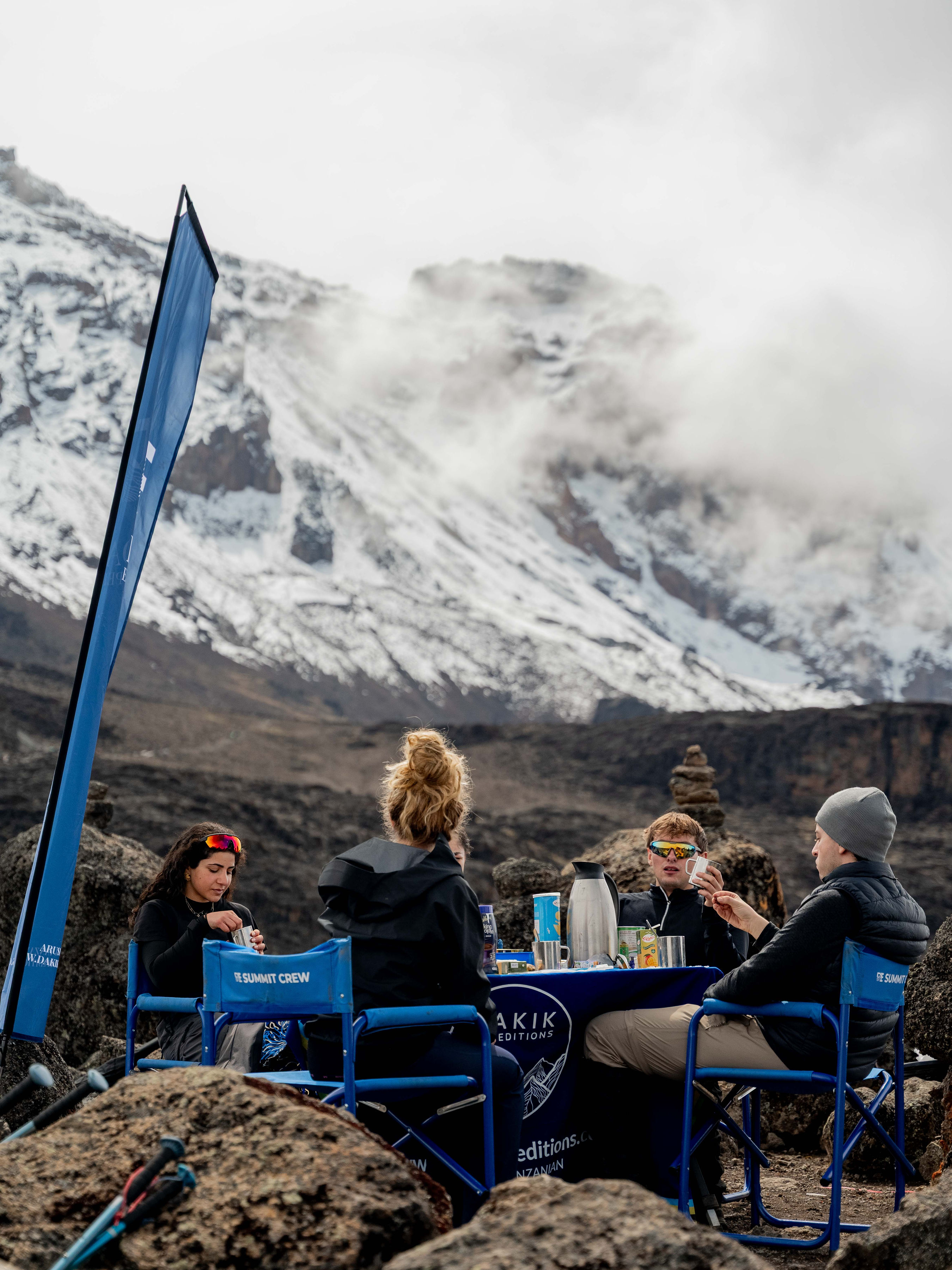
The approach to Stella Point begins in darkness. Most climbers leave Barafu around midnight.
How cold does it get on Kilimanjaro summit night?
Expect temperatures well below freezing, often close to minus ten once the wind picks up. This is the coldest part of the entire climb, by a wide margin. Layering matters more than any single piece of gear: a base layer, insulating mid layer, and a windproof outer shell, plus a warm hat, liner gloves under insulated mitts, and gaiters to keep snow out of your boots. Hand and toe warmers are worth packing. Most of the discomfort on summit night comes from being underdressed in the first hour, before the body warms up from moving.
Why do guides walk so slowly on summit night?
Guides set a deliberately slow pace, often described as pole pole, Swahili for slowly, slowly. This isn't a formality. At altitude, moving too fast raises the risk of altitude sickness and burns through energy you'll need later. Trust the pace even if it feels unnecessarily slow. Most people who struggle on summit night pushed too hard earlier in the trip, not on the night itself.
What does the climb from Barafu to the summit actually feel like?
The route from Barafu to Stella Point gains around 1,000 vertical metres over loose scree and rock, in the dark, with a headlamp as your only light source. Breathing takes more effort than usual since the air holds roughly half the oxygen of sea level. It's normal to feel out of breath doing very little. It's also normal for the hours to blur together. Bring snacks you actually like eating, since appetite tends to disappear at altitude, and staying fuelled matters more than most people expect.
"Most people who struggle on summit night pushed too hard earlier in the trip, not on the night itself."
Rawan DakikWhat is Stella Point?
Stella Point sits on the crater rim, about 45 minutes to an hour below the true summit. Reaching it is a good marker that the hardest part is behind you. From here, the trail to Uhuru Peak is a gentler, if slower, walk along the rim, usually timed to arrive right as the sky lightens.
Sunrise over the Southern Icefield, seen from the crater rim near Stella Point.
What happens at the summit?
Uhuru Peak sits at 5,895 metres, the highest point in Africa. Most groups spend 10 to 15 minutes at the summit, enough time for photos at the sign and a look at the sunrise over the crater and glaciers, before starting back down. Altitude makes lingering longer than that unwise, even when the view makes you want to.
How long does the descent take?
The descent to Barafu is faster than the climb up, usually two to three hours, but it's harder on the knees and easy to underestimate. Trekking poles help. Most people are back at camp for a few hours of sleep before continuing down to a lower camp the same day.
How to prepare for Kilimanjaro summit night
- Break in your boots well before the trip. Blisters at altitude are miserable to manage.
- Practice layering on cooler training hikes so you know your system works before it's minus ten and 3am.
- Train your legs for descents specifically, not just ascents. Downhill on tired knees is where most complaints come from.
- Talk to your guide honestly about how you're feeling throughout the trip. Catching altitude symptoms early is far easier to manage than pushing through them.
Summit night is the hardest single stretch of the climb, but it's also the most prepared-for part of the entire trip. Good pacing, the right layers, and a guide who knows the mountain make it manageable for the vast majority of people who attempt it. For the full gear breakdown, see our Kilimanjaro packing guide.