Most Kilimanjaro packing lists read the same because they're written the same way, a generic checklist copied from one site to the next. This one is built from what we actually see happen on the mountain, trip after trip, including the things guests almost never think to pack until it's too late.
The one item almost everyone forgets: camp shoes
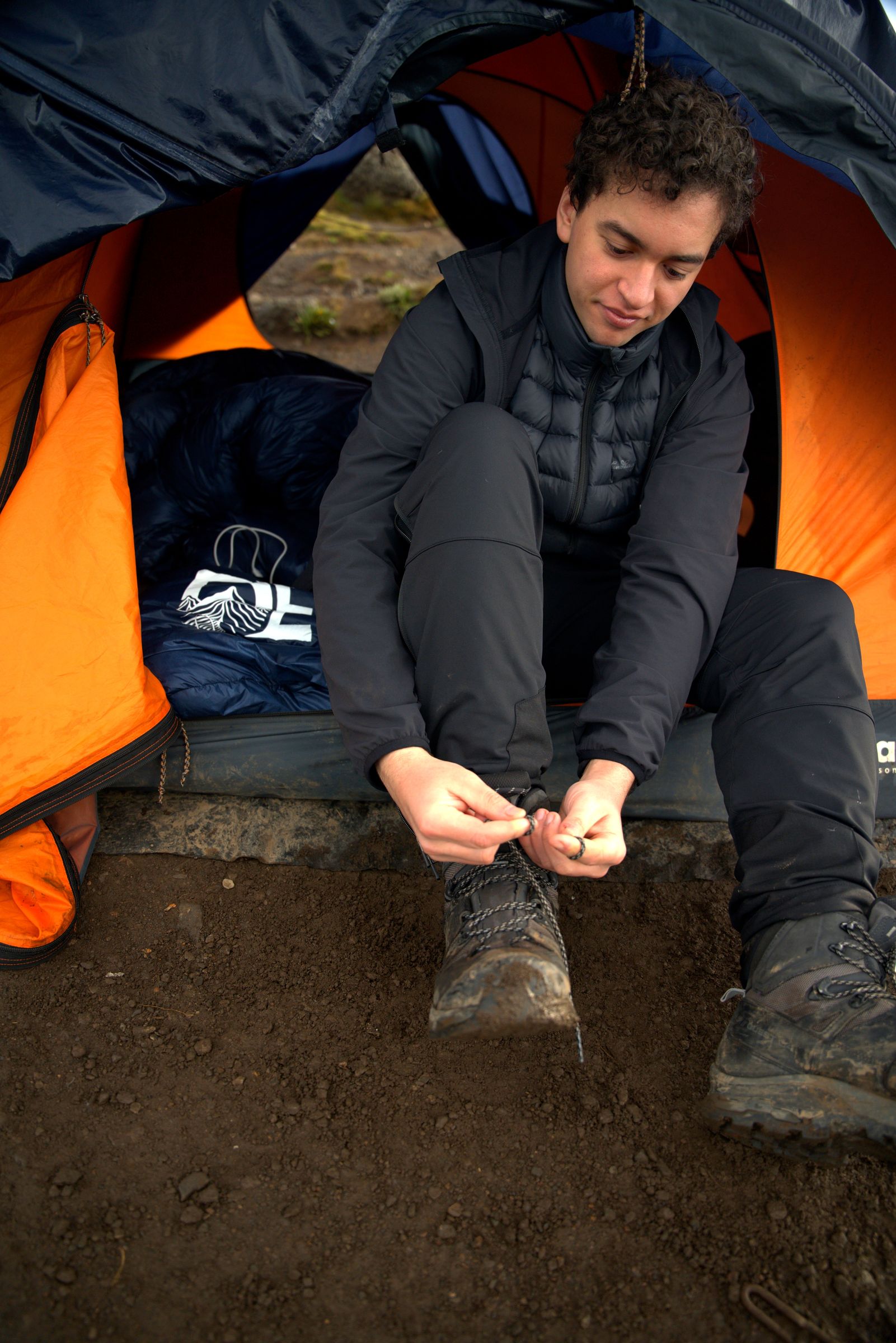
By the end of a full day of hiking, the last thing anyone wants is to keep wearing the boots they've had on for six or eight hours. A lightweight pair of camp shoes, sandals, or slip-ons gives your feet a genuine break in the evening and makes camp life noticeably more comfortable. It's a small, cheap item that almost never makes it onto standard packing lists, and it's one of the first things guests wish they'd brought once they see other climbers using theirs.
Clothing layers: less about the number, more about the system
There's no single correct number of base layers or socks to bring. It comes down to how your specific body handles cold, and that varies more than people expect. What matters more than quantity is having a proper system: a moisture-wicking base layer, an insulating mid layer, and a waterproof windproof outer shell, so you can adjust as conditions change rather than just piling on whatever's in your bag.
The mistake almost everyone makes without realizing it
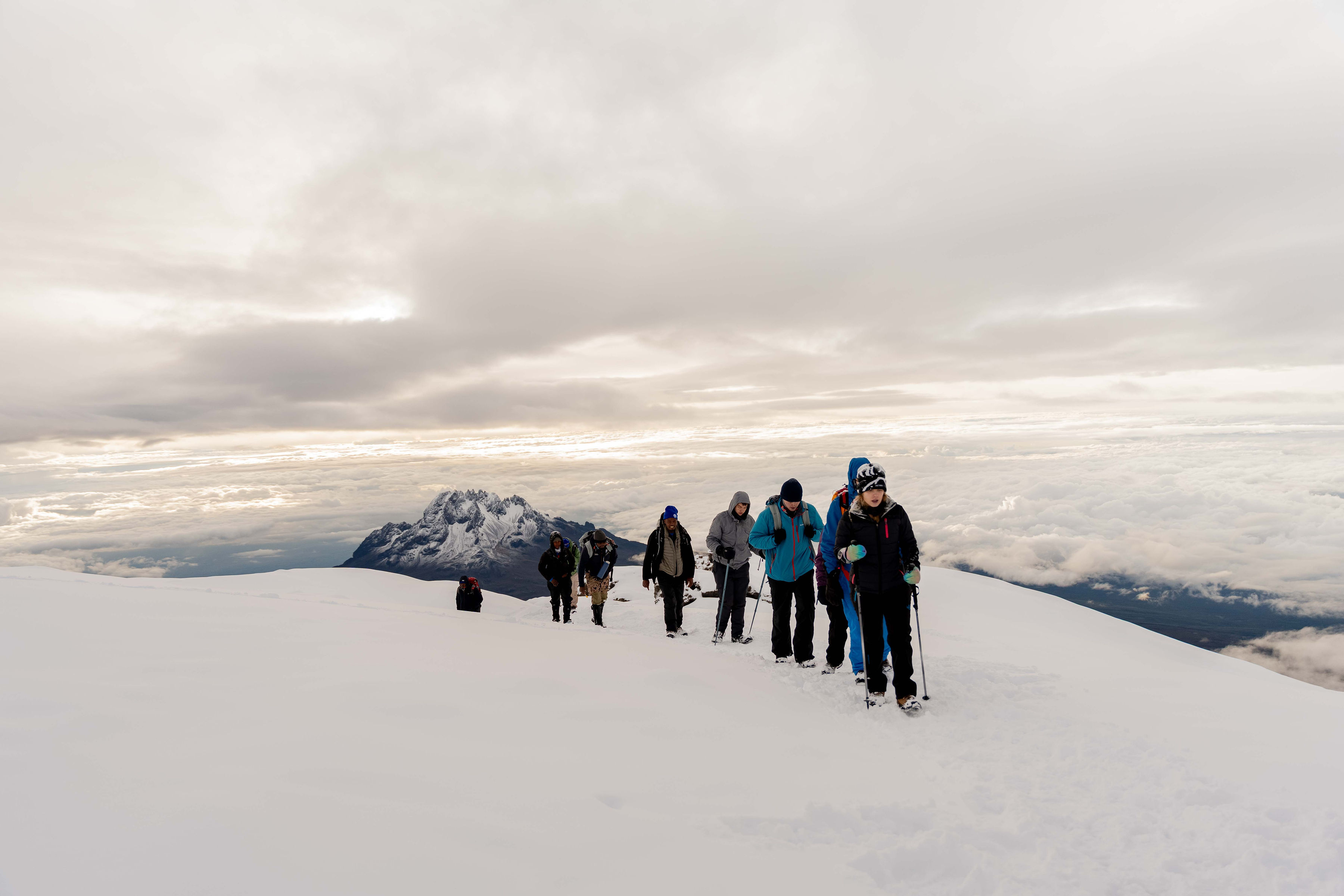
By the time summit night arrives, most guests have already worn through the majority of their clean clothing on the days before. Summit night, the coldest and hardest stretch of the entire climb, is often the point where people realize everything they'd saved for it is now used and dirty. It's worth deliberately holding back at least one full clean layer set specifically for summit night, rather than assuming you'll have something clean left by the time it matters most.
"Summit night is often the point where people realize everything they'd saved for it is now used and dirty."
Rawan DakikA habit worth borrowing from our guides
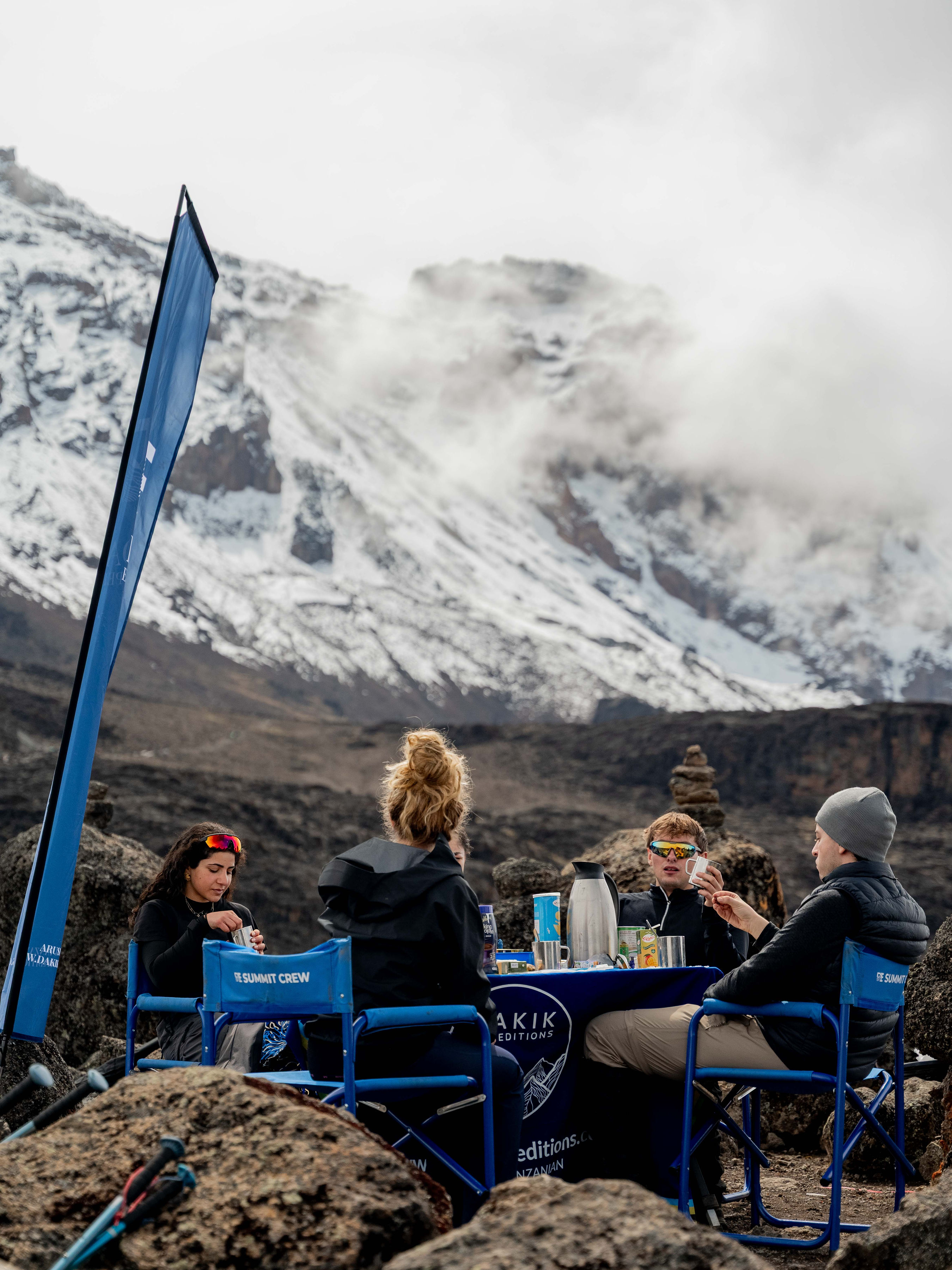
One thing we do personally on every climb: keep one set of clean clothes reserved just for camp, and a pair of socks used only inside the sleeping bag, never worn during the day. It sounds minor, but at altitude, where washing isn't an option and everything else is damp or dusty, this one habit does a lot for hygiene and comfort. Camp starts to feel like an actual rest instead of just a colder version of the trail.
What you can rent instead of buying
Some of the bulkier or more expensive gear doesn't need to be bought outright. We rent certain items directly, and for others, we work with a trusted rental partner in the region. This typically covers things like sleeping bags rated for sub-zero temperatures, trekking poles, and insulated jackets, items that are expensive to buy for a single trip and easy to rent in good condition through people who do this regularly.
What's worth buying instead of renting
Boots are the clearest example. Anything that needs to fit your foot specifically and needs breaking in before the climb is worth owning rather than renting, since a rented boot that's slightly wrong can cause real problems over multiple days. The same logic applies to base layers, socks, and gloves, items that sit directly against skin and perform better when they're already broken in and known to fit.
Why your bag has a weight limit, and why we go lower than required
Kilimanjaro National Park sets a maximum porter load of 20kg. We work to 19kg instead, keeping a small buffer below the legal limit rather than packing right up to it. It's a small margin, but it matters for the people carrying your bag up the mountain every day, and it's part of how we think about porter welfare on our trips, not just what's technically allowed.
How to actually think about your packing list
Rather than chasing an exact checklist, think in categories: what needs to fit and perform (boots, base layers, gloves), what's expensive and only useful for this one trip (sleeping bags, insulated jackets, poles), and what's small, cheap, and easy to forget but makes a real difference (camp shoes, a reserved clean layer, sleeping bag only socks). Get the first category right, rent the second, and don't skip the third.
One more habit worth adopting: bring two pairs of base gloves, not one. Gloves are easy to drop, misplace, or leave behind at camp, and losing your only pair partway through the climb turns the rest of the trip into a genuinely miserable experience. A spare pair weighs almost nothing and costs very little, but it's the kind of thing that only matters once, right when you need it most.