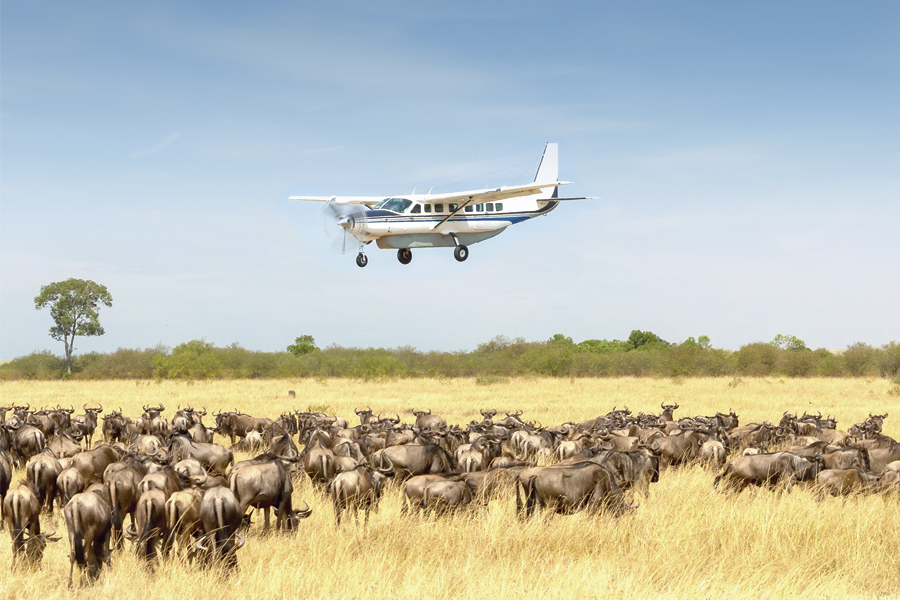
The Great Migration isn't a single event with a start and end date. It's roughly two million wildebeest, zebra, and gazelle moving in a continuous loop through the Serengeti and Maasai Mara ecosystem, following rainfall and grass, all year. There's no wrong time to see it. There's only a right time for what you specifically want to see.
What is the green season in the Serengeti?
The green season runs roughly November through May, covering both of Tanzania's rainy periods: the short rains in November and December, and the long rains in March through May. Grass is lush, skies are dramatic, and visitor numbers are at their lowest, along with rates. It's a good stretch for guests who want a quieter, greener Serengeti and don't mind occasional rain interrupting road travel.
When does calving season happen?
Tucked inside the green season is a shorter, drier window from late January through February, when the migration gathers on the southern plains around Ndutu for calving. Hundreds of thousands of wildebeest calves are born within a few concentrated weeks, and predator activity is at its highest, since a plain full of newborns draws lions, hyenas, and cheetahs from across the ecosystem. Skies are typically sunnier here than the rest of the green season, making it a strong window for guests who want dense wildlife action without the crowds of dry season.
When do the Grumeti River crossings happen?
Around June and into early July, the migration reaches the western corridor and the Grumeti River, home to some of the largest crocodiles in the ecosystem. Crossings here are smaller and less predictable than the more famous Mara crossings, but the western corridor sees far fewer vehicles, which makes for a different kind of experience for guests who'd rather watch a crossing without a line of trucks parked along the riverbank.
When is the best time to see the Mara River crossings?
Late July through September is peak crossing season in the northern Serengeti, as the herds push toward the Mara River on their way into Kenya's Maasai Mara. This is the migration most people picture: thousands of wildebeest funneling down steep banks into crocodile filled water. It's also the busiest and most expensive time to visit, since this is what most safari marketing is built around. Crossings aren't scheduled and can happen at any hour, so seeing one usually means patience and a guide who knows how to read the herds, not just luck.
What's the migration doing in October?
As the dry season winds down, the herds start drifting south again, back toward the plains where the cycle will restart with the green season and eventually calving. This transitional period sees smaller, more scattered groups rather than the massed herds of peak season, but it's also a quieter time to visit the Serengeti overall, with better rates and fewer vehicles at popular sightings.
So when should you actually go?
It depends on what matters most to the trip:
- Want the dramatic river crossings you've seen in documentaries? Aim for late July through September, and expect to share the view.
- Want dense predator action and newborn wildlife with fewer crowds? Late January through February.
- Want lower rates, quieter parks, and don't mind occasional rain? Anytime November through May.
- Want a crossing experience without the crowds of the Mara? June or early July in the western corridor.
"The migration is happening somewhere in the ecosystem every day of the year. The right time is really a question of which part of the story you want to watch."
Dakik TeamNone of these months are a wrong choice. The migration is happening somewhere in the ecosystem every day of the year. The right time is really a question of which part of the story you want to watch.
How exact is this timing, really?
Rainfall drives the migration, not the calendar, so these windows shift by a few weeks most years depending on how the rains fall. A trip planned around a specific migration event should always build in some flexibility, and a good guide will adjust the itinerary in real time based on where the herds actually are that week, not where they were last year.